
How to Aim on Hitscan vs Projectile Heroes
One is reaction, the other is prediction. Why hitscan and projectile heroes need different aim, different crosshairs and different practice.
By OWMAUK Staff
Overwatch splits its shooting heroes into two aim families, and the single biggest aim mistake players make is treating them the same. Hitscan is reaction - the bullet lands the instant you click, so you aim where the enemy is now. Projectile is prediction - the shot flies and sometimes drops, so you aim where the enemy will be. They feel different, they train differently, and they even want different crosshairs. Sort out which family a hero belongs to and your aim on both improves.
The core difference in one table
| Hitscan | Projectile | |
|---|---|---|
| Travel time | None - lands instantly | Yes - the shot flies across the map |
| Aim at | Where they are right now | Where they will be (lead) |
| Drop / arc | None | Some heroes drop under gravity |
| Core skill | Reaction, flick, tracking | Prediction, leading, arc |
| Upside | Precise, no leading | Splash, shots around cover, big hitboxes |
| Example heroes | Cassidy, Ashe, Widow, Soldier: 76, Sojourn | Genji, Pharah, Hanzo, Junkrat, Echo |
Hitscan: aim at now
On a hitscan hero the bullet arrives the frame you click, so leading a target actively makes you miss - if you aim ahead of a moving enemy the bullet lands in empty space beside them. Your whole job is to have the crosshair on the target at the instant you fire. That splits into two motor skills: flicking (snap onto a target in one motion, for single high-value shots like a Widow headshot) and tracking (glue the crosshair to a moving target while firing, for spray heroes like Soldier). Crosshair placement at head height does most of the work before you even flick.

Cassidy
Hitscan · flick + tracking, aim at now
Hitscan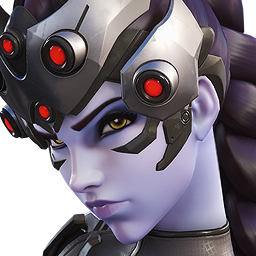
Widowmaker
Hitscan · pure flick sniper
Hitscan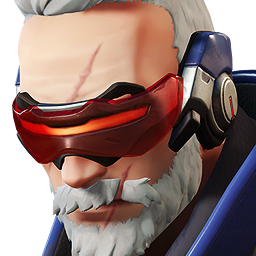
Soldier: 76
Hitscan · tracking spray
HitscanProjectile: aim at next
On a projectile hero the shot needs time to travel, and some fall under gravity, so you aim at a point in front of the target and, at range, above them. You lead more the further away and the faster sideways they move. In exchange for that difficulty you get things hitscan cannot do: splash damage that hits without a direct connect, shots that arc over cover and around shields, and generally larger, more forgiving hitboxes. Pharah aims at feet and walls, Hanzo learns a fixed arc per distance, Genji leads the strafe. The projectile aim guide breaks each of those down.
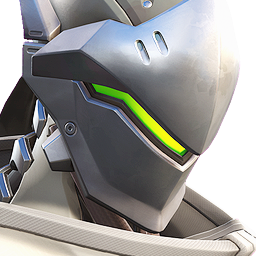
Genji
Projectile · fast, flat - lead the strafe
Projectile
Hanzo
Projectile · heavy arc, learn the drop
ProjectileDifferent heroes, different crosshairs
Because Overwatch saves a crosshair per hero, use that to your advantage. Hitscan precision heroes want a tight dot or a small cross - a minimal reticle that marks the exact pixel you are flicking to, often with a small centre gap that leaves the headshot point clear. Projectile and mobile-tracking heroes want something slightly larger - a small circle or cross that gives a spatial reference for leading and tracking, since you are not pixel-flicking a head. Set each of your mains once and the reticle always reminds your hands which mode they are in.
A reliable skeleton: Thickness 1, Opacity 100, Outline 100, Show Accuracy OFF. Then change only length, gap and dot size per hero - tight dot for snipers, small frame for flankers. Full detail in the crosshair guide.
Train them separately
- Warm up both families, not just one. Five to ten minutes in the Practice Range: flick and track on the bots for hitscan, then throw leading shots at the moving bots for projectile.
- Do not mix crosshair placement habits mid-session. If you main both, do a short block on each rather than swapping every game.
- Pick one sensitivity and leave it. Both reaction and prediction only calibrate if your cm/360 stays fixed - every sens change resets the muscle memory for both.
- Consistency beats volume: 15 to 30 minutes a day builds more than a single long weekend grind. Aim Lab has free OW-specific routines for both flicking and tracking.
This is the framework that sits under the general aim guide and the projectile deep-dive - read those next. Hitscan is reaction, projectile is prediction, and the players who plateau are almost always training one skill and expecting it to cover the other.
Hitscan aims at now. Projectile aims at next. Never confuse the two mid-fight.