
Loading…
A fact-dense reference to the standard community callouts on four core CS2 maps. Learn the names every teammate already uses on Mirage, Inferno, Dust2 and Ancient, where each position sits, and how to memorise them fast.
By Mauk HK
Callouts are the shared vocabulary of Counter-Strike. A precise call like "two A ramp, one rotating jungle" turns four seconds of panic into an instant, coordinated read of the round. Vague chatter like "guys they're over there" gets people killed. The good news is that the standard callout set for the competitive map pool is stable and well-documented. The same names have been used across CS:GO and CS2 for years, so learning them once pays off forever.
This guide walks through four of the most-played maps (Mirage, Inferno, Dust2 and Ancient), covering the layout of each, the key callouts site by site, and a quick-reference table per map. The goal is not to teach you every smoke and strat, but to make sure that when a teammate says "he’s in tetris" or "rotate short" you know exactly where to look. Every name below is the community-standard term you will hear in matchmaking, FACEIT and the pro scene alike.
Golden rule of callouts: say the LOCATION before the count and the action. "A ramp, two, pushing" beats "two guys are like pushing up the thing near A". Front-load the place so teammates can swing their crosshair while you finish talking.
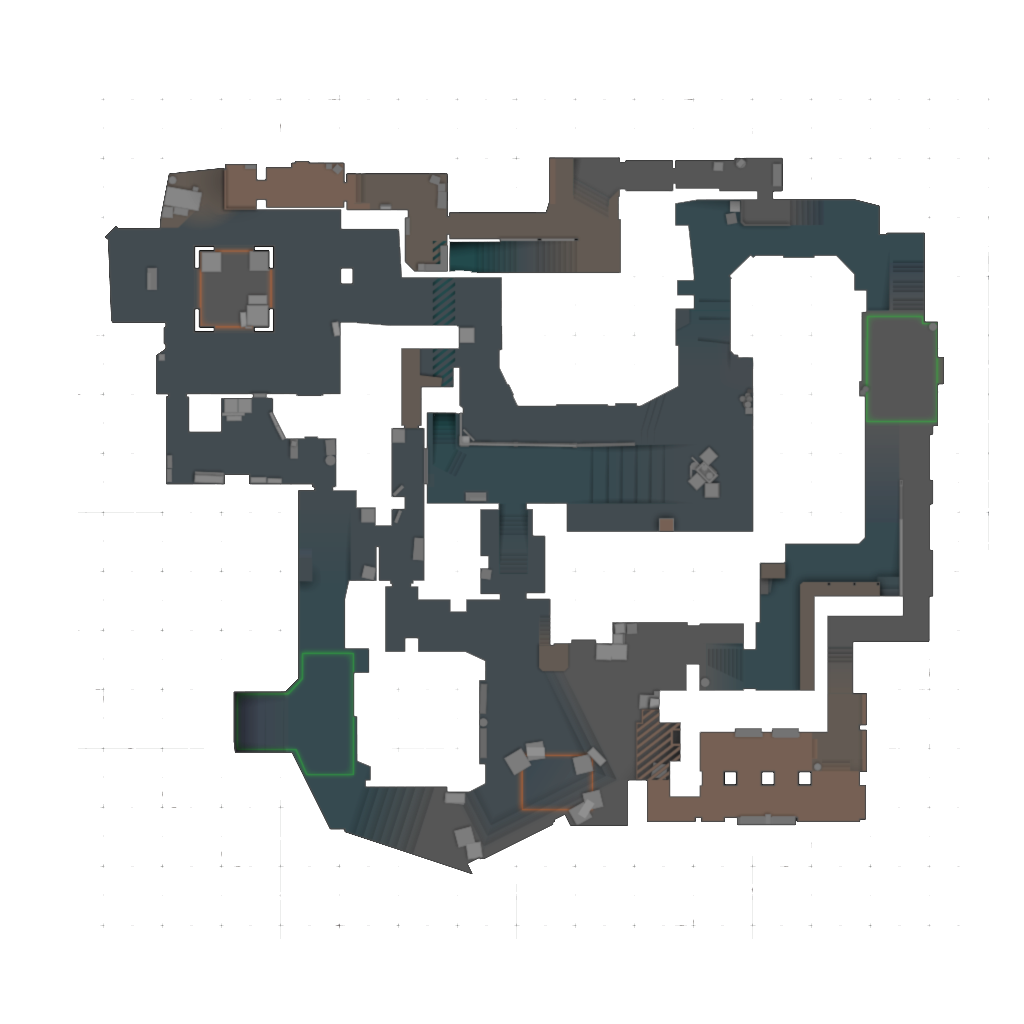
Mirage is a three-lane map built around control of mid. The A site sits to the west, accessed by Ts through A ramp and palace; the B site sits to the east, reached through apartments and bench. Mid bridges everything: from top mid the Ts can split toward either bombsite, while CTs hold the connector and window angles. Whoever wins the mid duel usually dictates the round, which is why so much of the Mirage callout vocabulary clusters around that central corridor.
| Callout | Area | Side |
|---|---|---|
| A Ramp | A site | T entrance |
| Palace | A site | T entrance |
| Tetris / Sandwich | A site | A site |
| Jungle | Mid → A | CT rotation |
| Connector | Mid → A | Contested |
| Top Mid | Mid | T control |
| Window | Mid | CT hold |
| B Apartments | B site | T entrance |
| Market | B site | CT rotation |
| Van / Bench | B site | B site |
Inferno is a tight, corridor-heavy map that rewards utility and discipline. The B site is reached almost entirely through banana, a long curving choke that produces some of the most contested early-round fights in the game. The A site is a larger, more open plaza accessed through apartments and the mid corridors, with multiple angles for CTs to hold. Because the lanes are so narrow, callouts here are precise and granular - players distinguish between bottom, top and second positions within the same area.
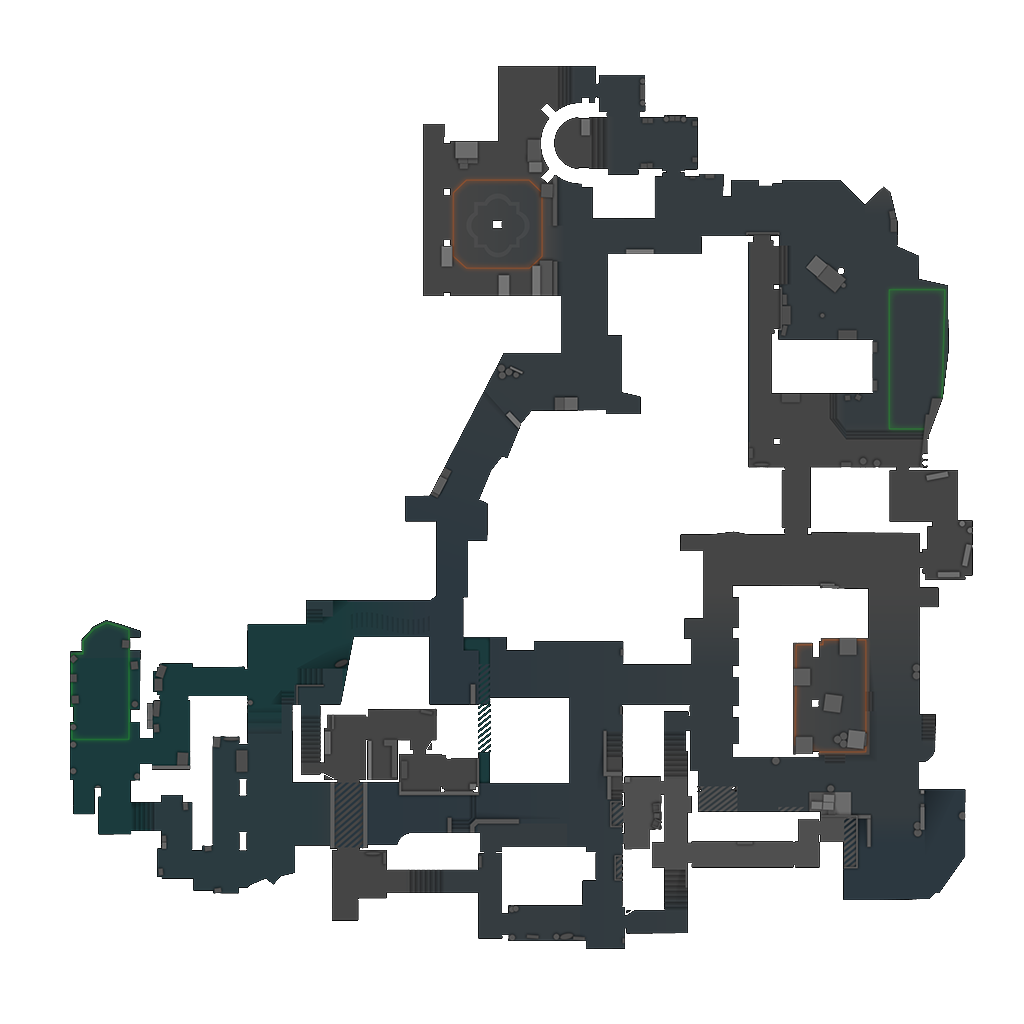
On Inferno, "banana" is not one spot. It is a whole lane. Always qualify it: "bottom banana", "top banana", or "car" so teammates know how far the contact actually is.
| Callout | Area | Side |
|---|---|---|
| Banana | B approach | Contested |
| Top Banana | B approach | CT hold |
| Car | B site | B site |
| Sandbags | B approach | CT hold |
| Apartments | A approach | T entrance |
| Pit | A site | A site |
| Library | A approach | CT rotation |
| Arch | A approach | CT side |
| A Short | A approach | Contested |
| A Long | A approach | CT side |
| Boiler | Mid | Flank |
Dust2 is the most iconic map in Counter-Strike and arguably the easiest to learn callouts for because its three lanes are so cleanly separated. A long and the catwalk feed the A site to the south; the tunnels and B platform feed the B site to the north; and a wide-open mid, anchored by mid doors, lets both teams contest the centre and flank. Its straightforward geometry makes Dust2 the perfect map to drill callout fundamentals.
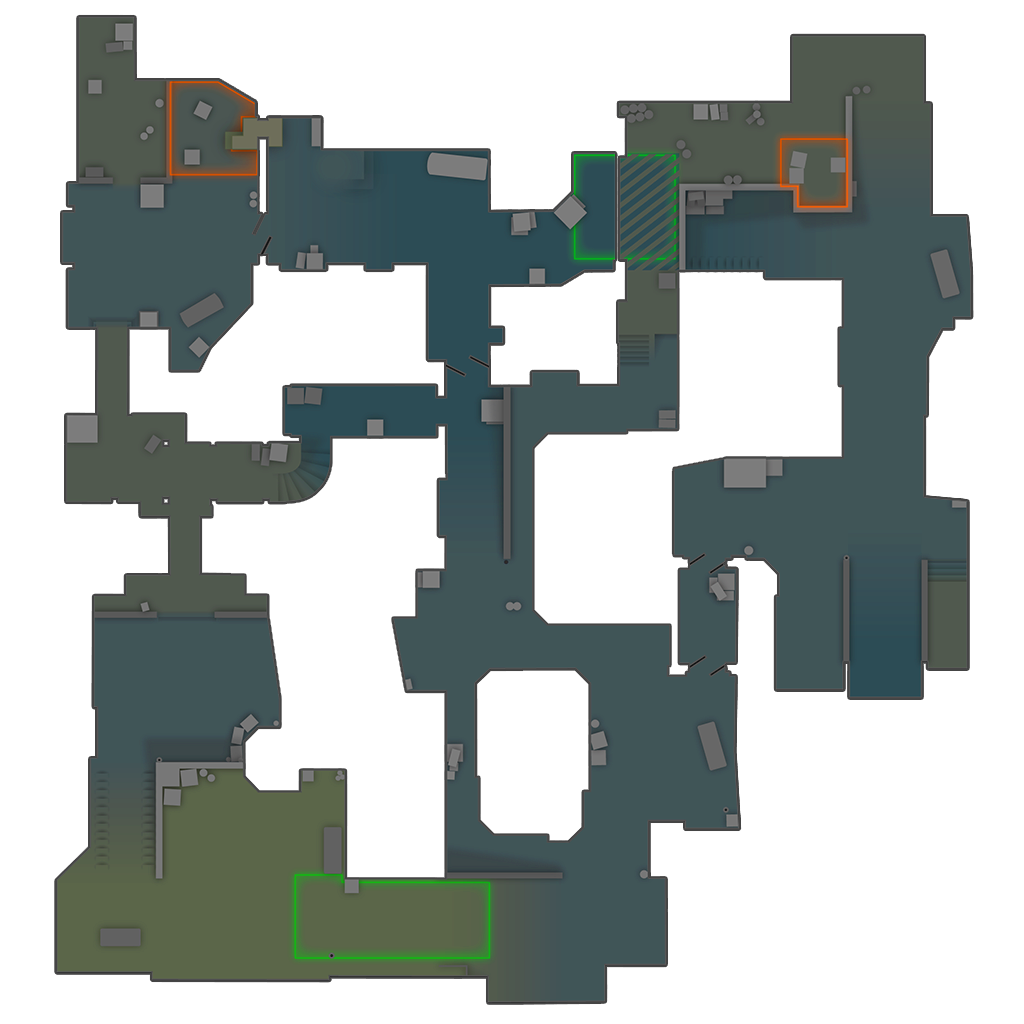
| Callout | Area | Side |
|---|---|---|
| Long A | A approach | T entrance |
| Pit | A site | A site |
| Blue / Car | A approach | Contested |
| Catwalk / Short | A approach | T entrance |
| Mid Doors | Mid | Contested |
| Lower Tunnels | B approach | T entrance |
| Upper Tunnels | B approach | T entrance |
| B Platform / Window | B site | CT hold |
| B Car | B site | B site |
| CT Spawn | Center | CT rotation |
Ancient is the newest map of the four and the most vertical. The A site is defended from the temple high ground and reached by Ts through A main; the B site sits on the opposite side, approached through B main and the ramp/cave route. Mid is a dense, multi-level space anchored by the donut, a circular pillar formation, plus the red and green coloured rooms that give players quick reference points. The verticality and tight angles make clear callouts especially important here.
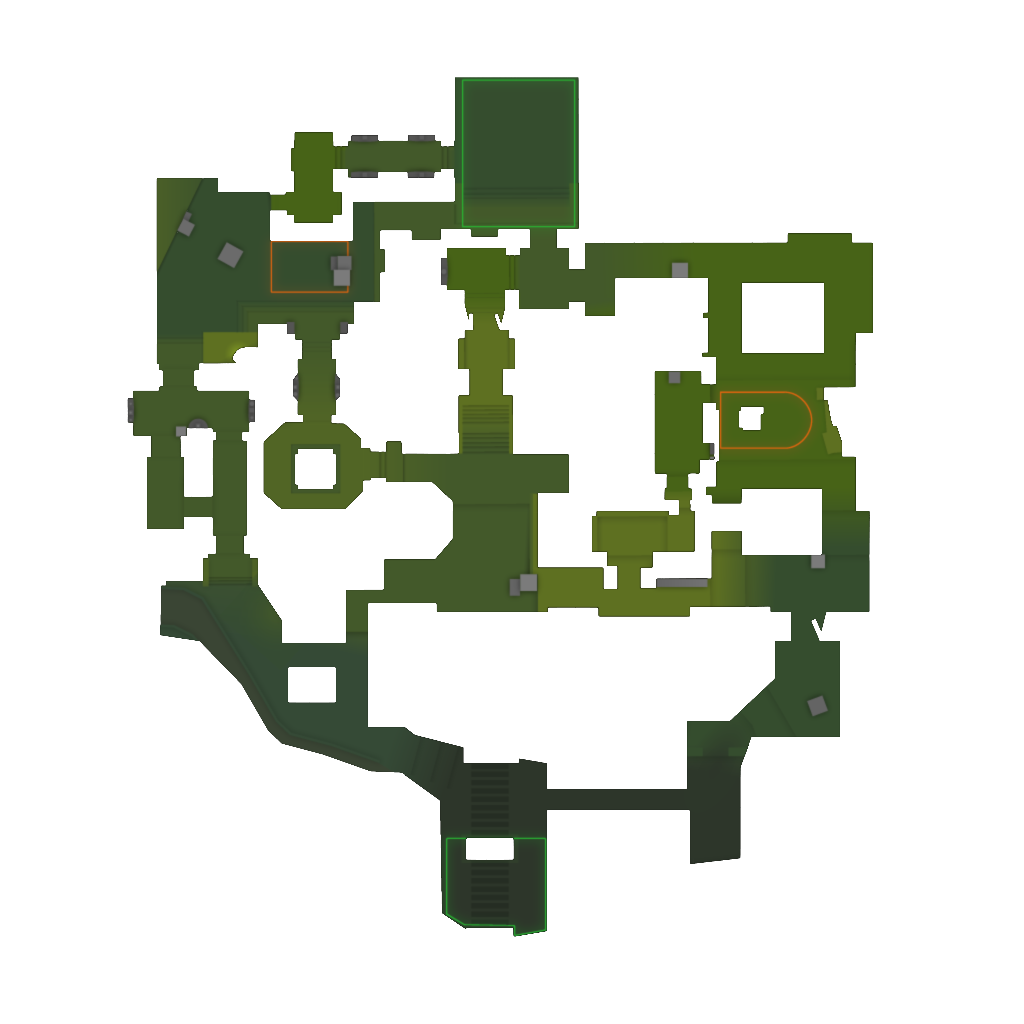
Ancient leans on colour callouts, "red" and "green" rooms, because the map’s symmetry makes generic terms confusing. Learn the colours first; they instantly anchor whether a contact is CT-side mid or deeper toward a site.
| Callout | Area | Side |
|---|---|---|
| A Main | A approach | T entrance |
| Ramp / Cave | B approach | Contested |
| Temple | A site | CT hold |
| Donut | Mid | Contested |
| Red | Mid | CT side |
| Green | Mid | Rotation |
| B Main | B approach | T entrance |
| Scary Alley | B approach | Contested |
| Water | B approach | Contested |
| CT | Center | CT rotation |
You do not memorise callouts by staring at a diagram once. You build them into muscle memory by repetition in the actual map. The fastest method is to load a map in an offline practice server, walk every lane, and say each callout out loud as you arrive at it. Pairing the word with the physical movement locks it in far faster than passive reading. Within two or three passes per map, the names start coming automatically.
""A team that shares the same map of words sees the round before it happens. Callouts are the cheapest, fastest upgrade to your Counter-Strike, no aim training required."
Master these four maps and you will already communicate fluently across the bulk of the active duty pool. The same principles (standard names, location-first calls, and a little offline drilling) carry directly over to Nuke, Overpass, Anubis and Train. Get the vocabulary right and every other part of your game gets easier.